
Oaxaca, Mexico · A 7-day journey led by Kayleigh During
Archaeology & Culture of the Zapotec Valleys
The Zapotecs called themselves Ben ’Zaa, the Cloud People. Their civilization grew up in the Central Valleys of Oaxaca more than 2,000 years ago, and their descendants still live throughout them, speaking Zapotec, weaving textiles, making pottery, and maintaining traditions that long predate the Spanish arrival.
Over seven days, we explore both sides of that history: the ancient cities and the communities that still live among them.

Who leads it
Kayleigh During
The journey is led by Kayleigh During — History With Kayleigh — who travels with the group for all seven days: walking the sites, sharing the history where it happened, and filming along the way.
For anyone who follows her work, this is a rare chance to experience it in person rather than through a screen — the same places, the same stories, with the time and access to ask whatever you want. The group is kept intentionally small at fifteen guests, so the week stays personal.
Overview
We spend seven days exploring the Central Valleys of Oaxaca, staying all six nights in the same hotel in the historic centre of Oaxaca City. Each day we travel out into a different part of the surrounding valleys and return in the evening, with Hierve el Agua the farthest at roughly an hour and a half from the city.
Each day takes us somewhere different: the Zapotec cities of Monte Albán, Mitla, Yagul, Dainzú and Lambityeco; the mineral springs at Hierve el Agua; the markets and churches of Oaxaca; and communities where Zapotec language, weaving, pottery, and other traditions remain part of everyday life.
One full day is spent in Teotitlán del Valle with Margarita Gutiérrez Martínez and her family, learning about traditional weaving, natural dyes, Zapotec language, and the history of the village.
The group is limited to fifteen guests, and Kayleigh During travels with us throughout the week.
Who built it
Ben ’Zaa, the Cloud People
The Zapotec civilization developed in the valleys of Oaxaca more than 2,000 years ago and created one of the earliest urban traditions in Mesoamerica.
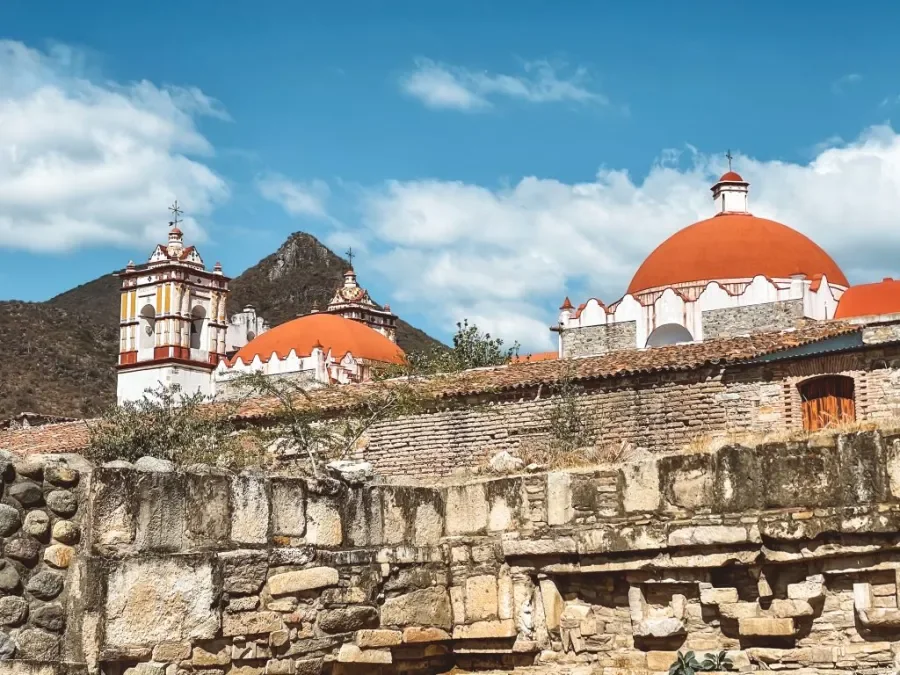
They built Monte Albán on a mountaintop overlooking the valleys, developed one of the earliest known writing systems in the Americas, constructed elaborate tombs and ceremonial centres, and left behind cities including Mitla, Yagul, Dainzú and Lambityeco.
But Zapotec culture is not something that disappeared with the archaeological sites.
Zapotec languages are still spoken across Oaxaca, and many of the communities we visit continue traditions that connect directly with this much older history.
Day by day
Markets, the Zócalo & Santo Domingo
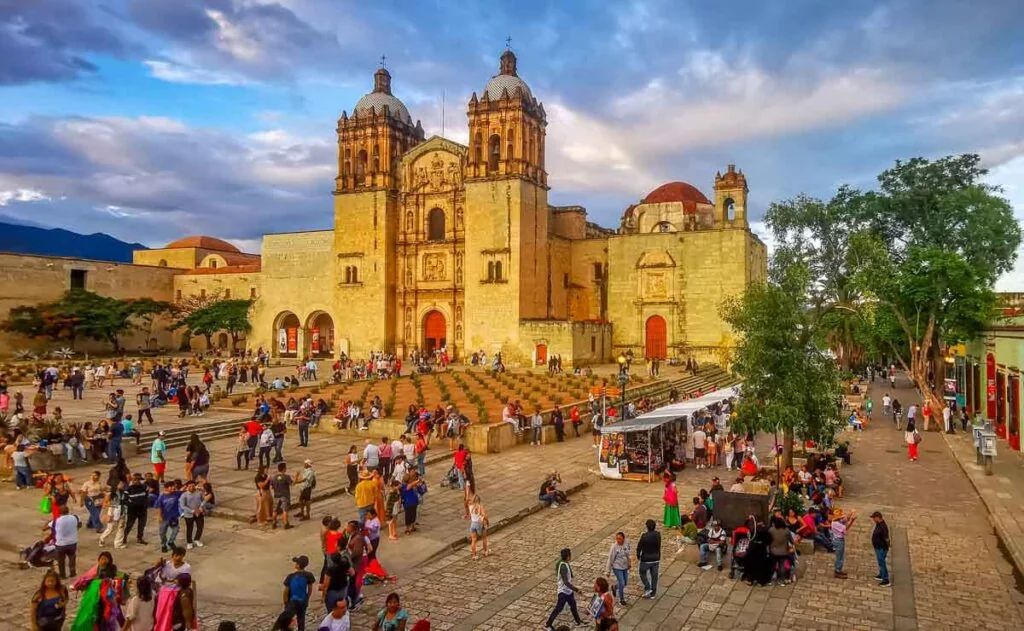
We begin with an afternoon walk through the historic centre of Oaxaca.
We visit the Zócalo, the cathedral, and the city’s traditional markets. At Benito Juárez Market you’ll find chocolate, mole, dried chiles, chapulines and other foods from across Oaxaca. Nearby, the 20 de Noviembre market is known for its long hall of grills and smoke-filled food stalls.
We finish at Santo Domingo, one of Oaxaca’s most important colonial churches, before sitting down together for our welcome dinner.
Night: Oaxaca City · Meals: Dinner · Driving: about ½ h

Tomb 7, ancient sites and village churches
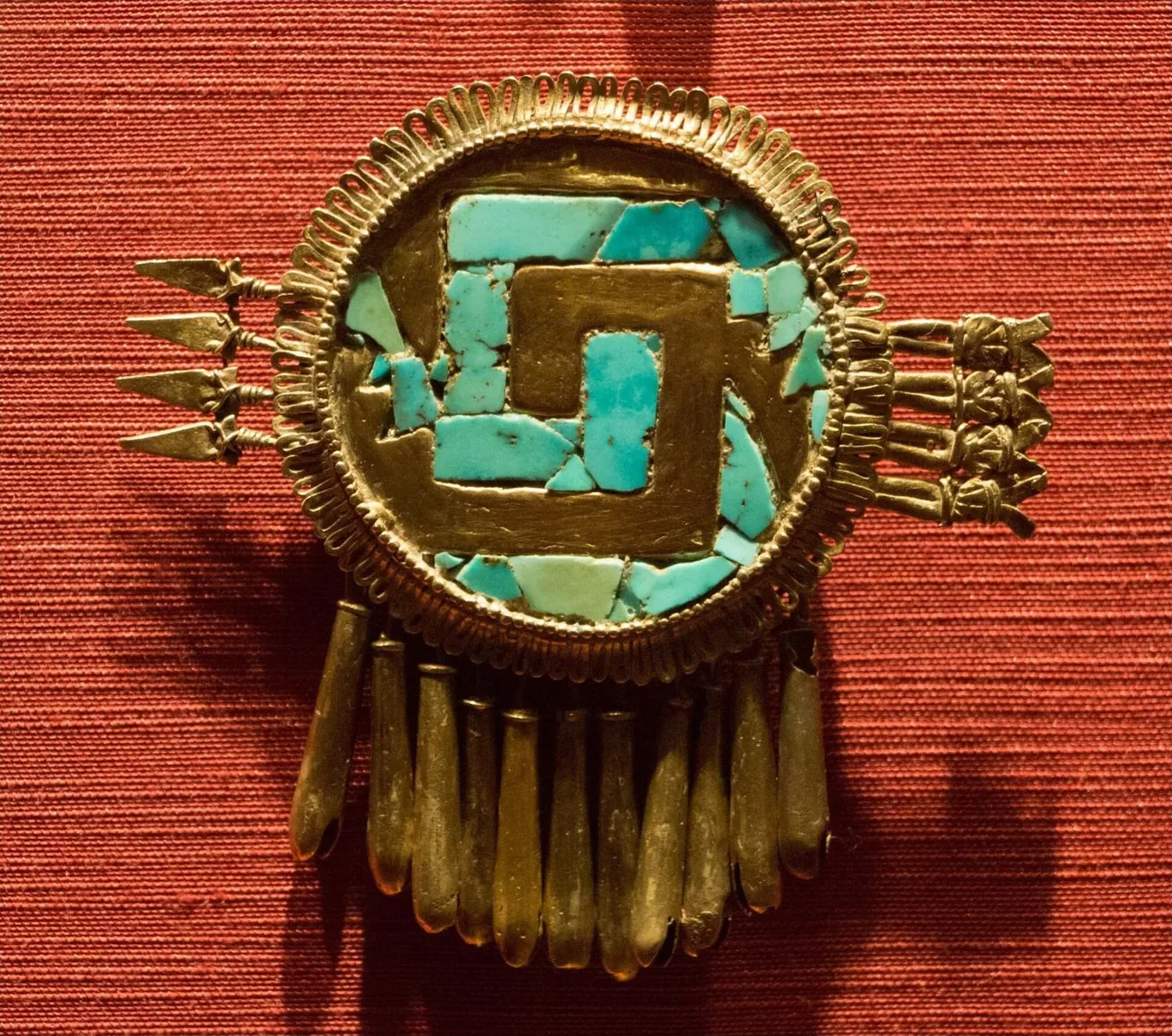
We begin at the Museo de las Culturas, which holds the gold, carved bones and turquoise mosaics that Alfonso Caso lifted out of Tomb 7 in 1932.
From there the road runs east through the valley.
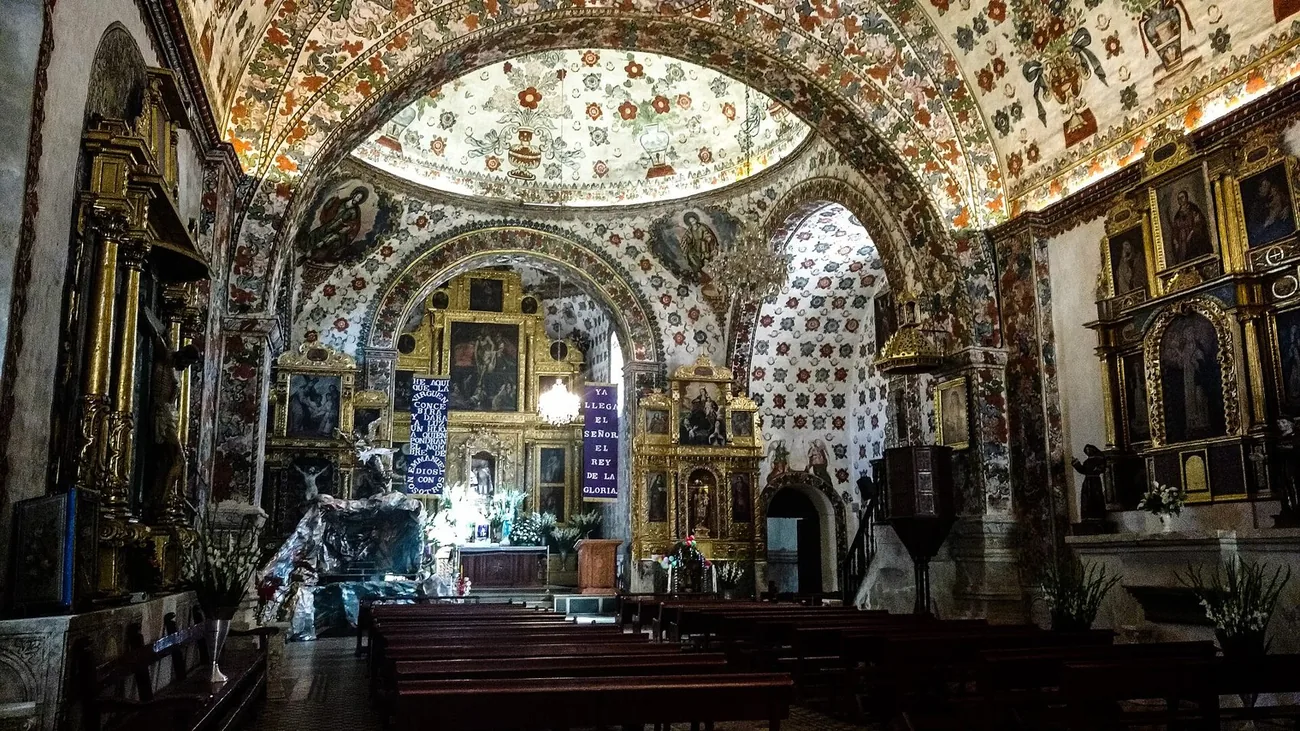
Our first stop is the Árbol del Tule, one of the widest trees in the world, followed by the church of San Jerónimo Tlacochahuaya, whose interior was decorated by Zapotec artists.
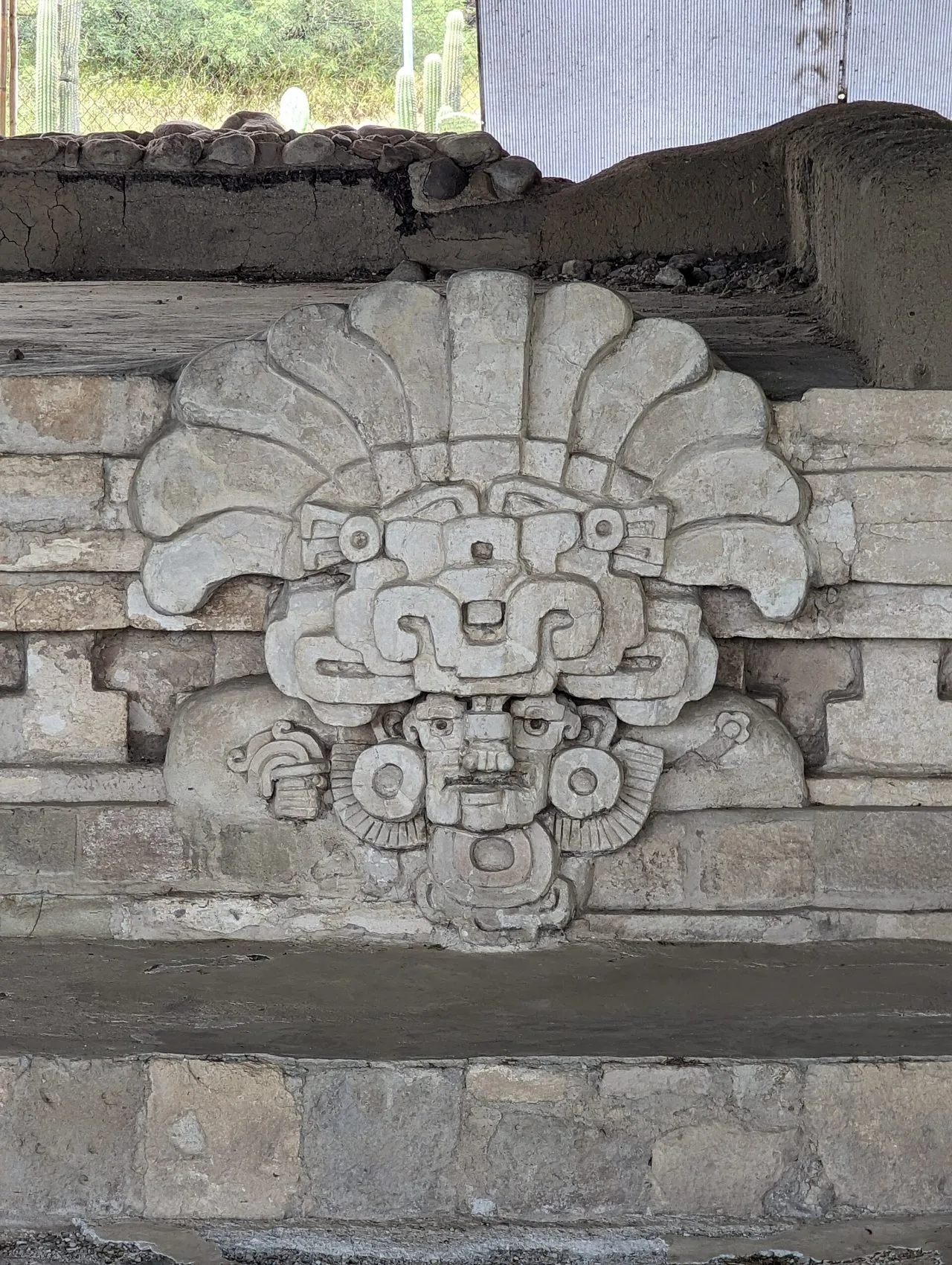
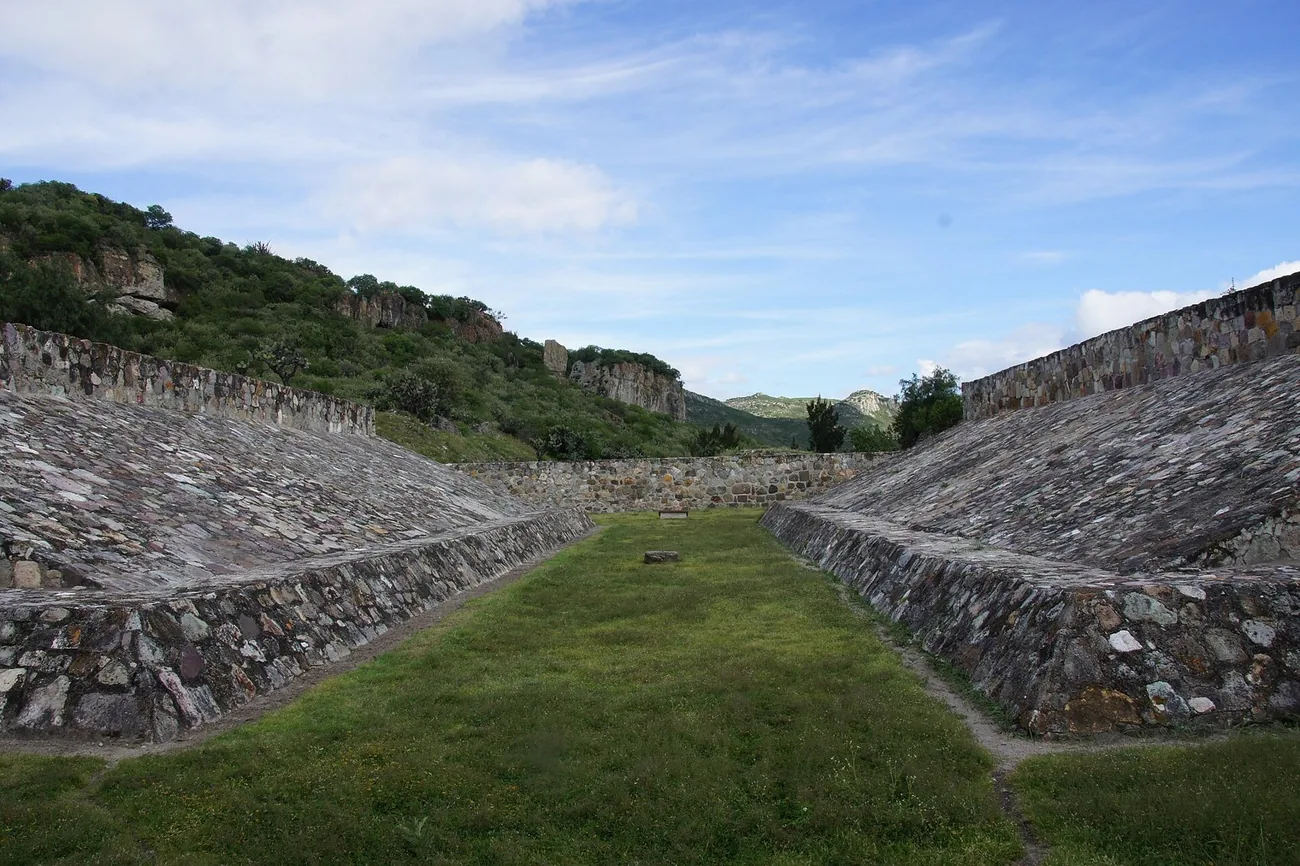
At Dainzú we see carvings of ballplayers in helmets and padded gloves, cut more than 2,000 years ago, while Lambityeco preserves large stucco images of Cocijo, the Zapotec rain deity.
Night: Oaxaca City · Meals: Breakfast, lunch, dinner · Driving: about 2 h
Yagul, Mitla & Hierve el Agua
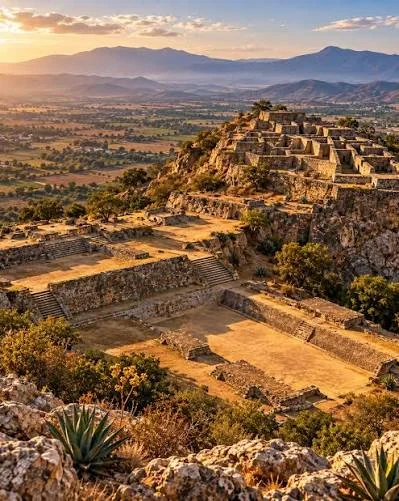
The day begins at Yagul, where palaces and courtyards sit below a hilltop fortress overlooking the valley. Those who want to can climb to the top for the view.
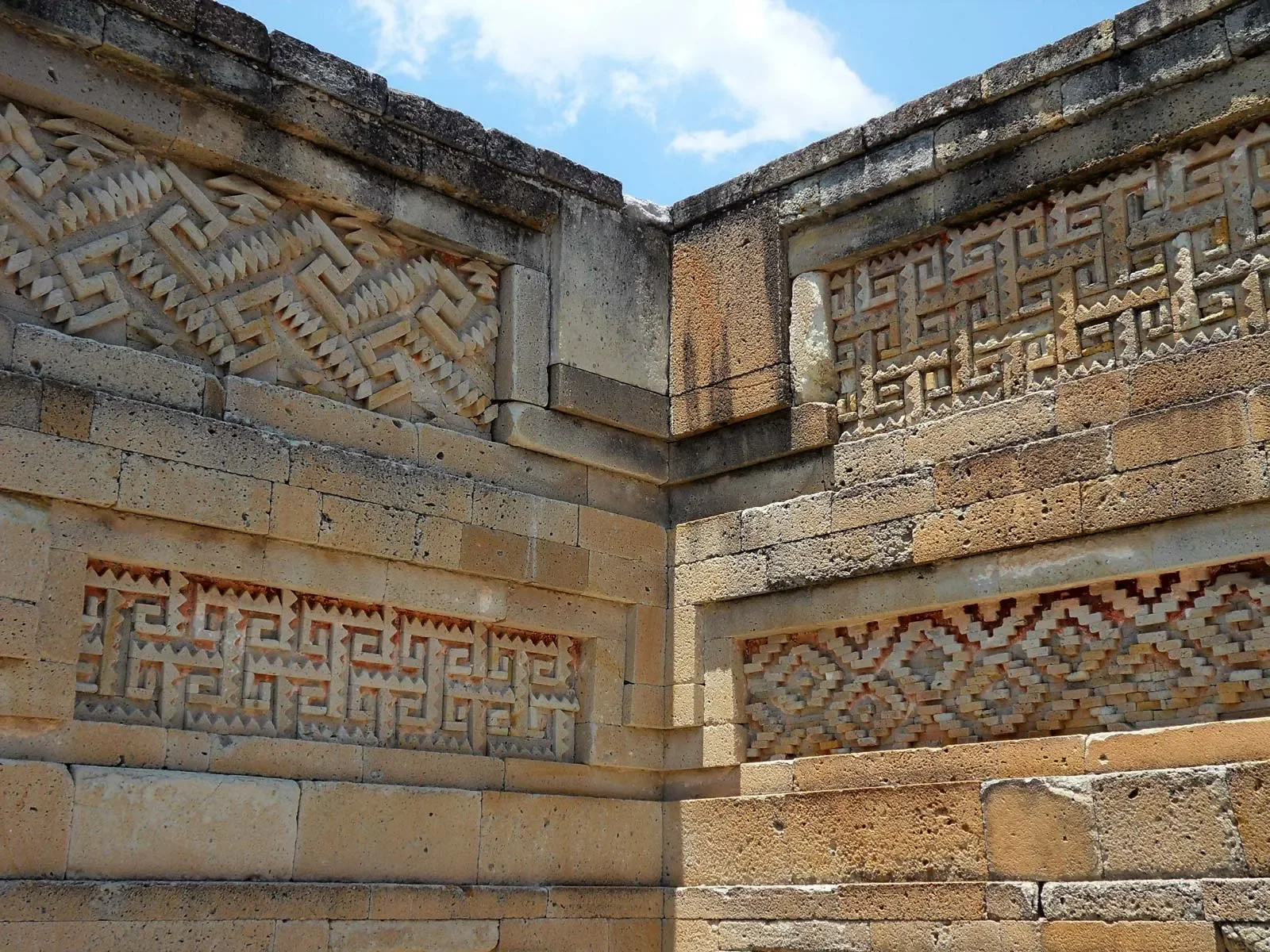
We continue to Mitla. Its buildings carry fourteen different geometric patterns, assembled from thousands of individually cut stones fitted without mortar, and they have stood for six hundred years.
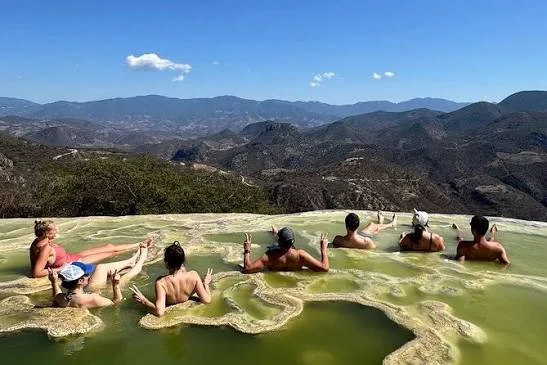
From there we drive into the mountains to Hierve el Agua.
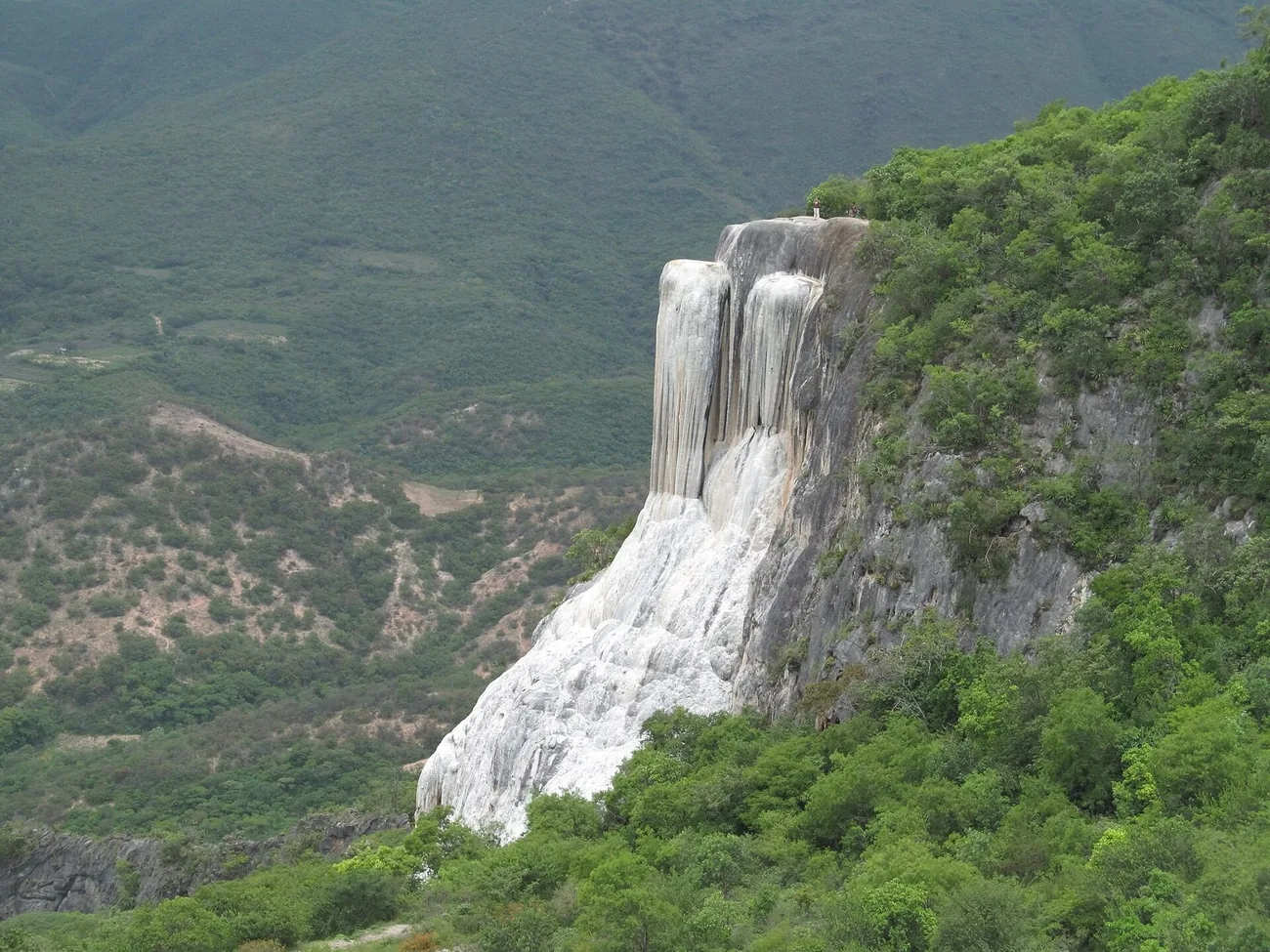
Mineral-rich water has created large white formations along the cliffs. You can swim in the pools above the valley or take the optional path down toward the base of the formations. The Zapotec canals that once carried this water were cut 2,500 years ago.
Night: Oaxaca City · Meals: Breakfast, lunch, dinner · Driving: about 2½ h
A day with a Zapotec family
We spend the day in Teotitlán del Valle with Margarita Gutiérrez Martínez and her family.
Teotitlán has a long weaving tradition and remains a Zapotec-speaking community.
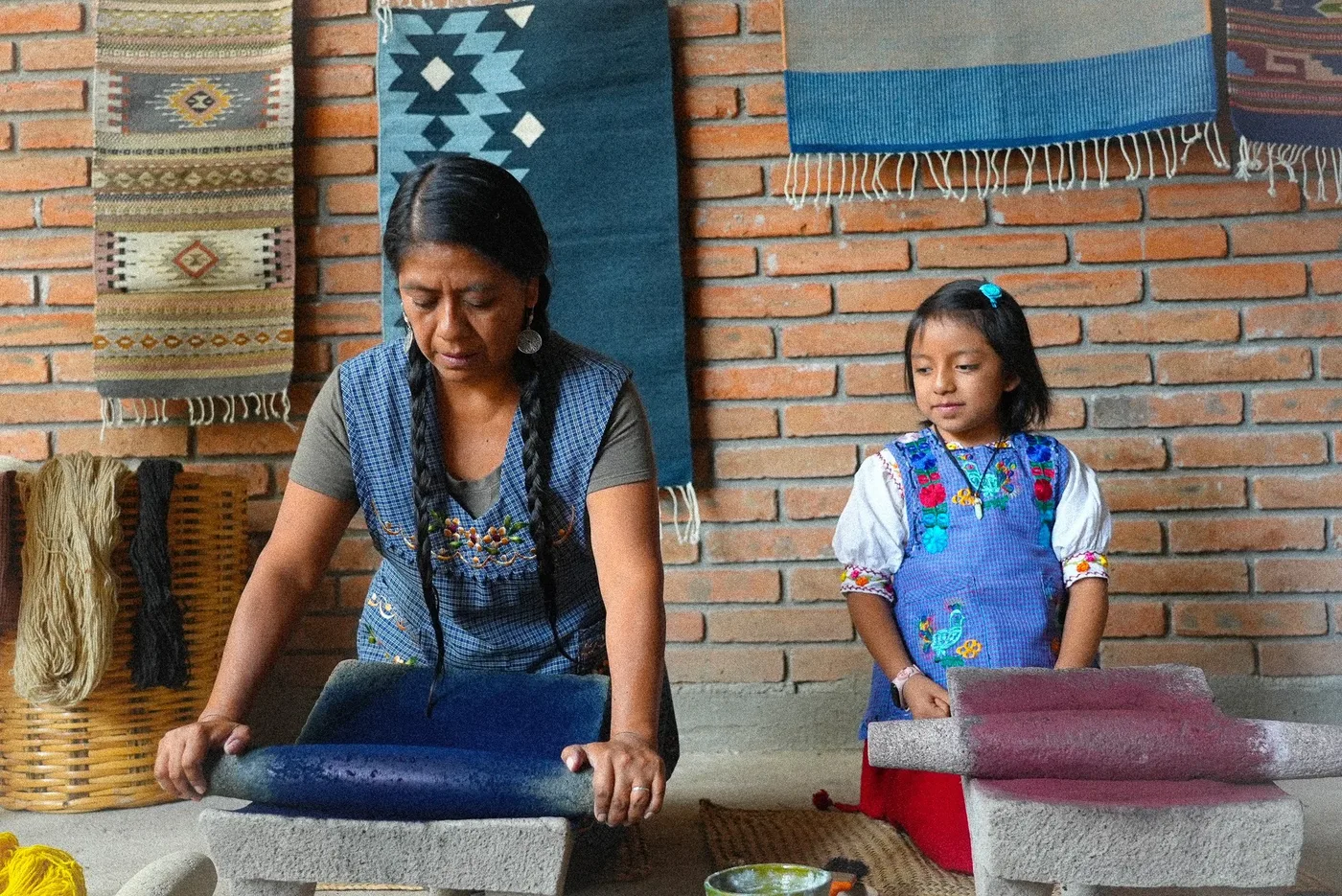
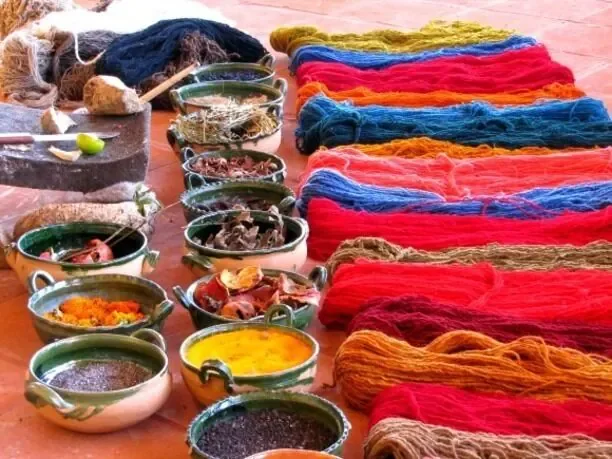
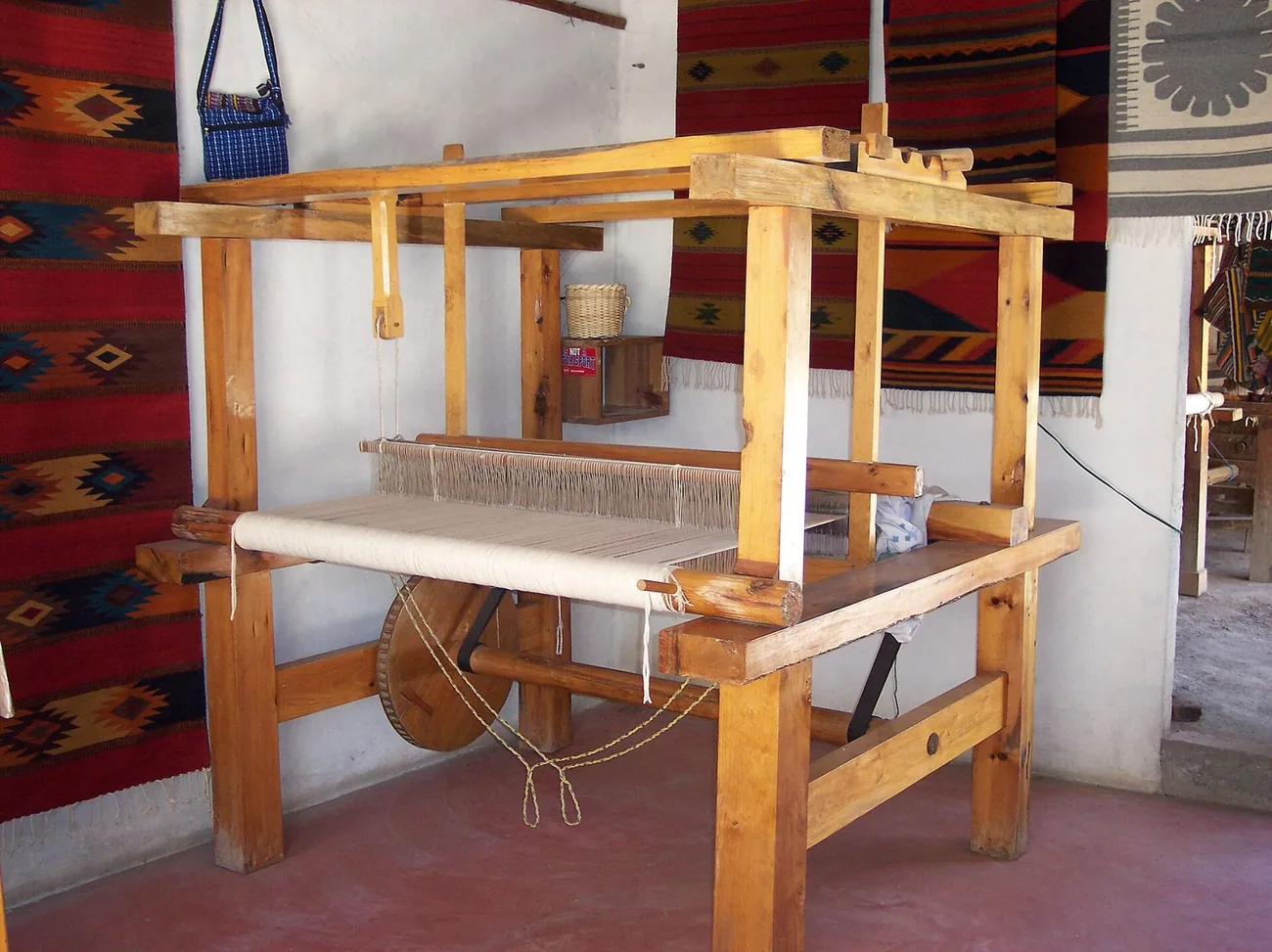
We learn how wool is prepared, woven and coloured using traditional dyes such as cochineal, indigo and local plants. We also have an introductory Zapotec language lesson and explore the village itself.
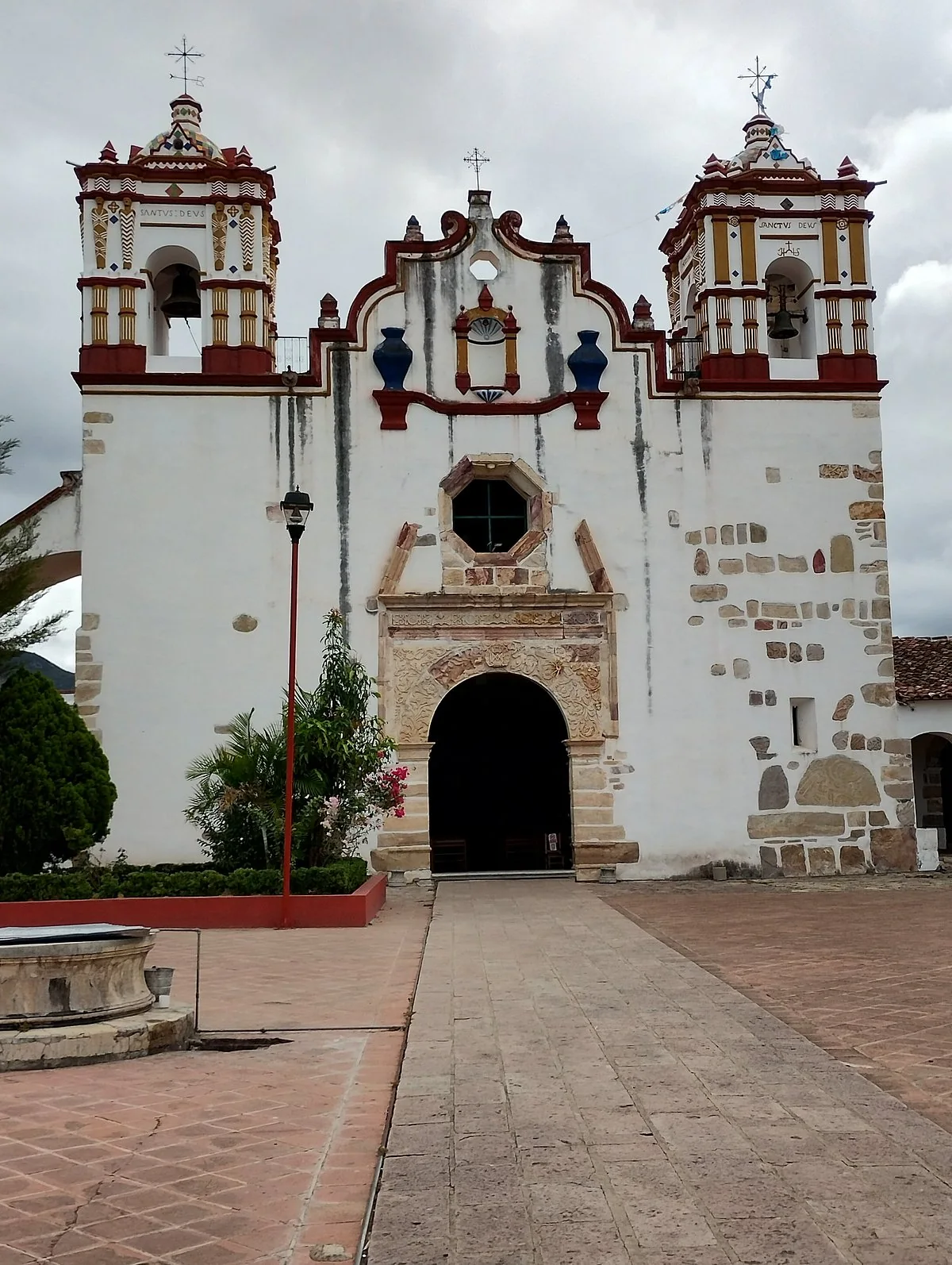
The church was built over an earlier Zapotec ceremonial site, and ancient carved stones can still be seen incorporated into its walls.
Lunch is prepared by the family, and there is plenty of time throughout the day to talk, ask questions, and learn about life in the community.
Night: Oaxaca City · Meals: Breakfast, lunch, dinner · Driving: about 1¼ h
Cuilapan & black pottery
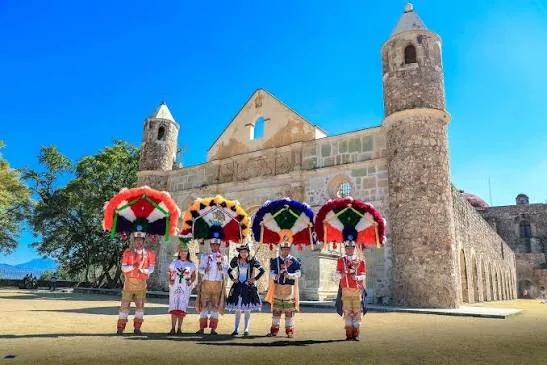
We travel south from Oaxaca to Cuilapan, where Dominican friars began constructing a huge monastery and basilica in the sixteenth century.
The basilica was never completed, leaving its long rows of stone columns and open roof standing against the mountains.
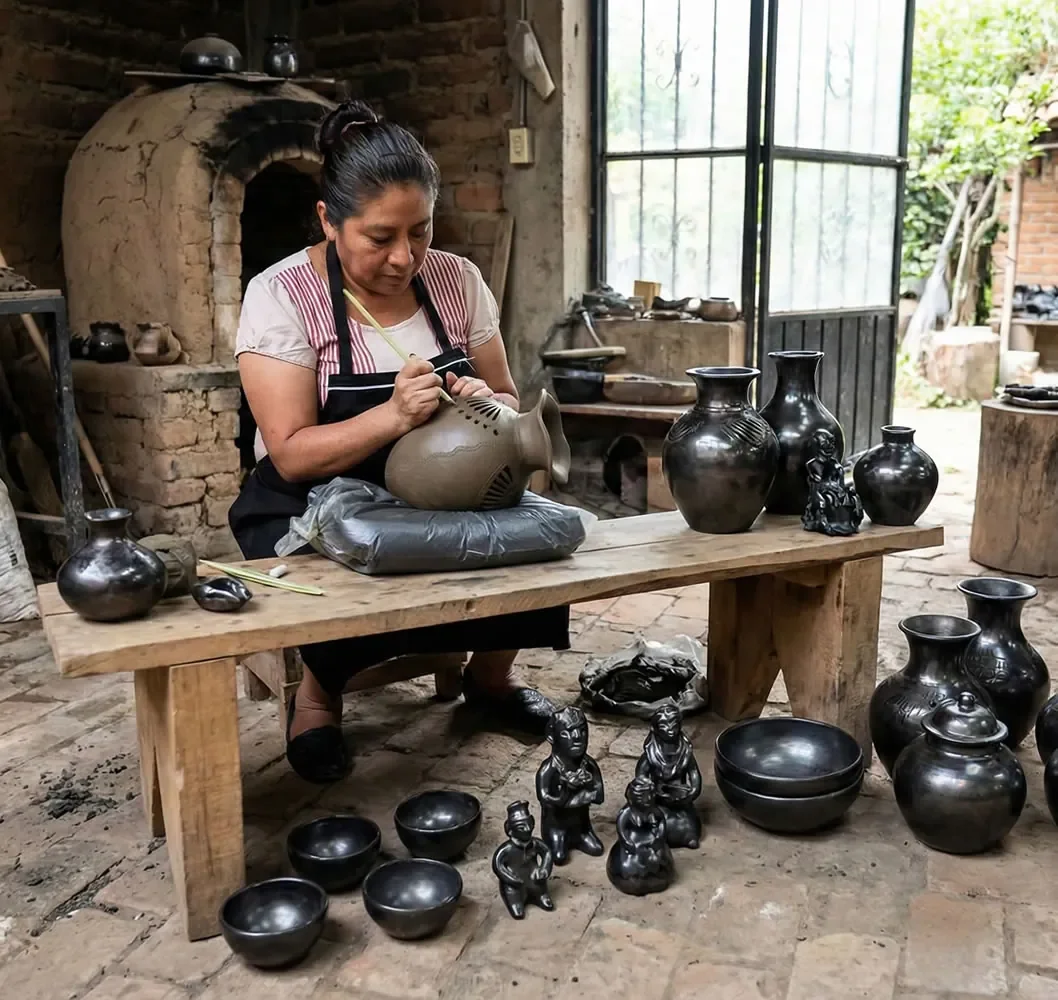
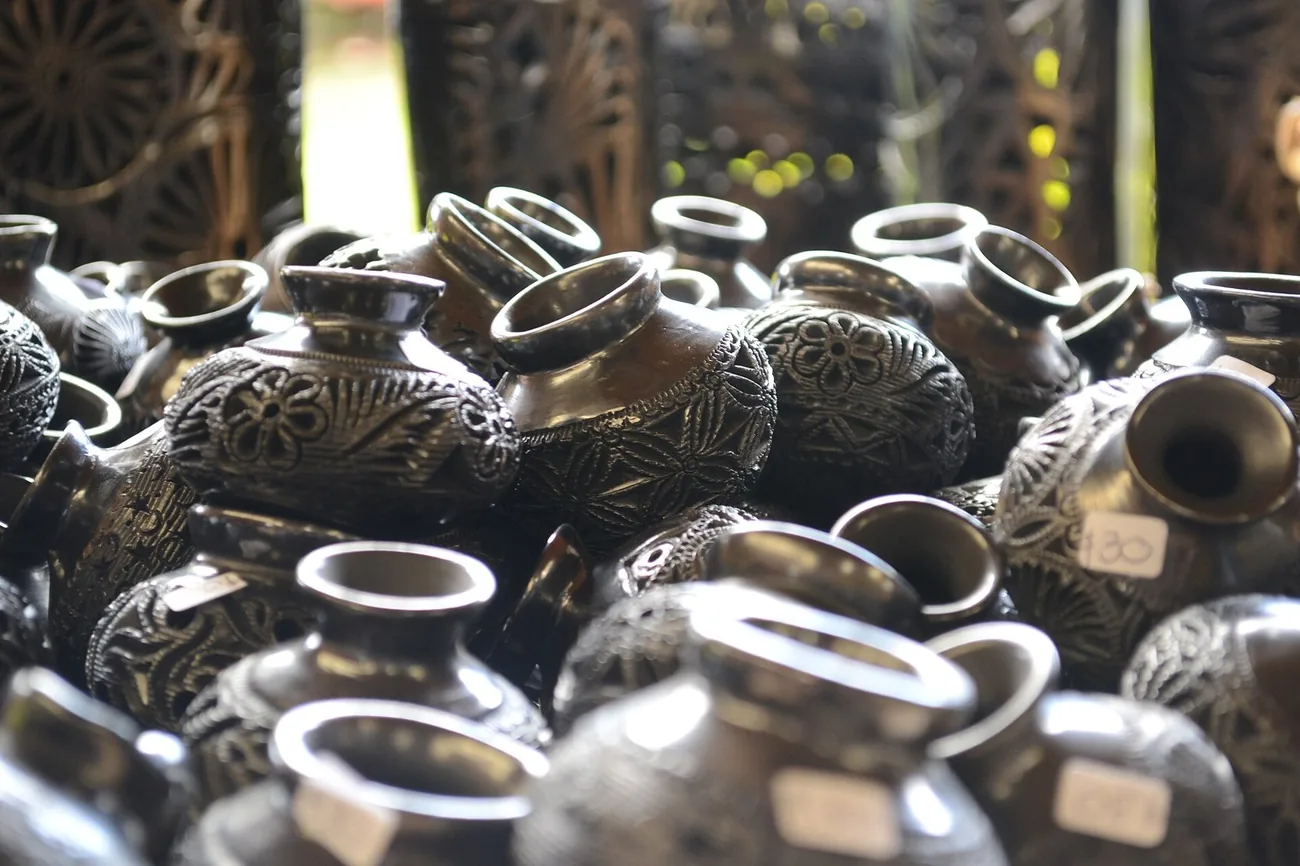
We then visit San Bartolo Coyotepec, a town known for its black pottery. At a family workshop we see how the clay is shaped by hand without a potter’s wheel and polished before firing.
We return to Oaxaca by mid-afternoon, leaving the rest of the day free.
Night: Oaxaca City · Meals: Breakfast, lunch, dinner · Driving: about 1¼ h
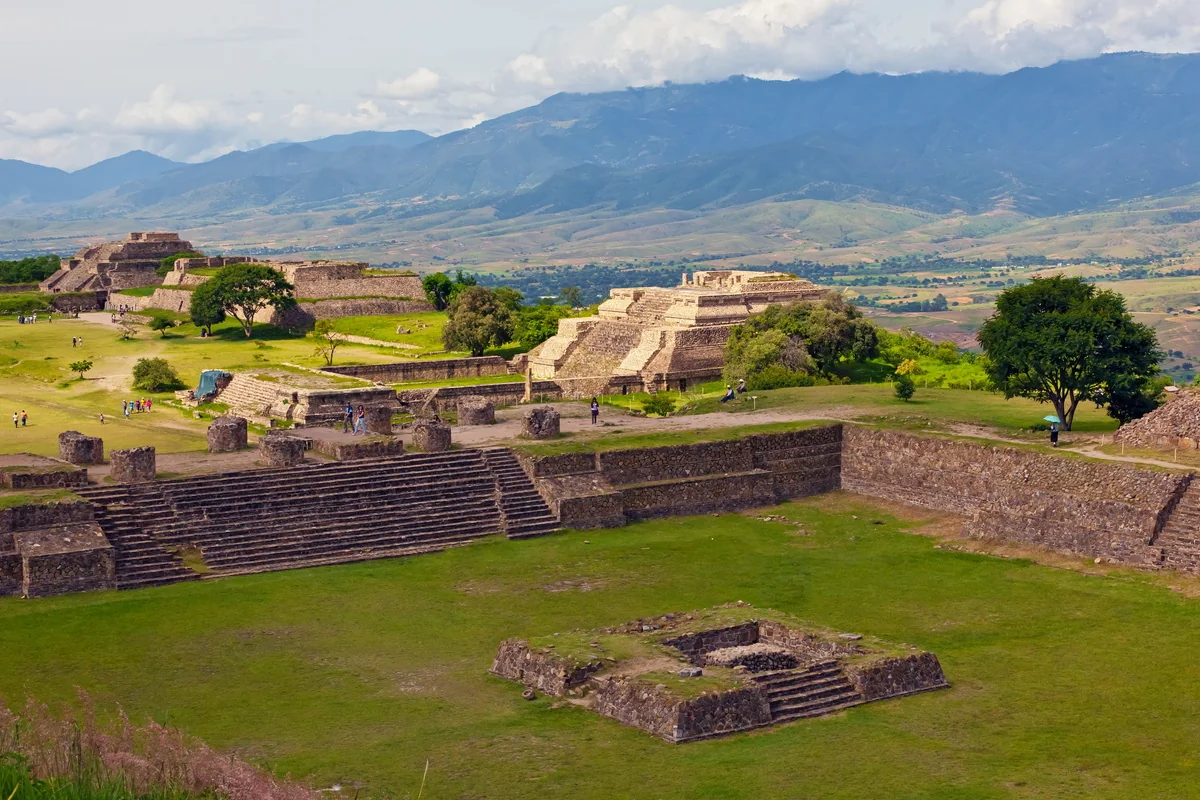
The Zapotec capital
We arrive at Monte Albán for opening time.
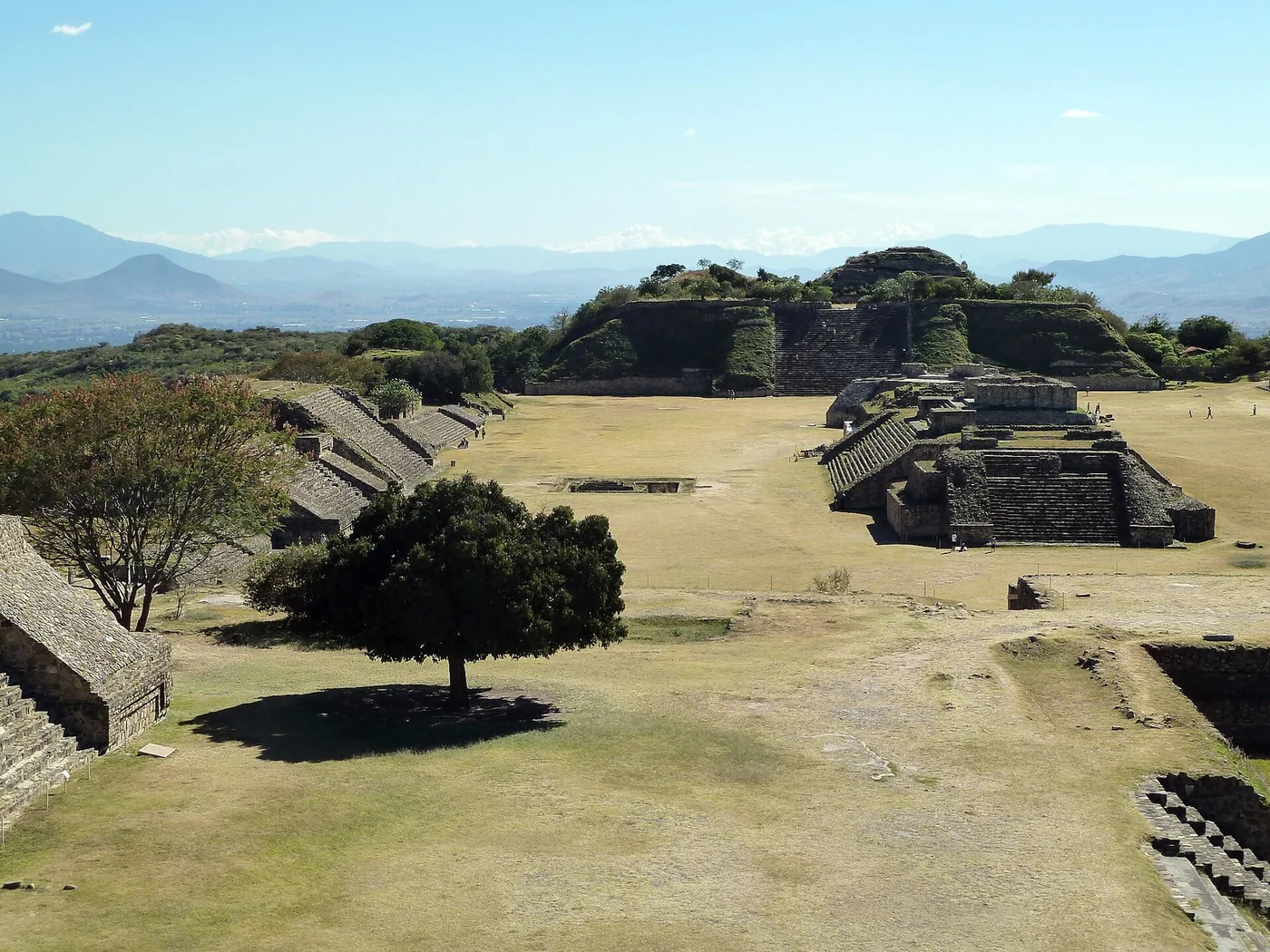
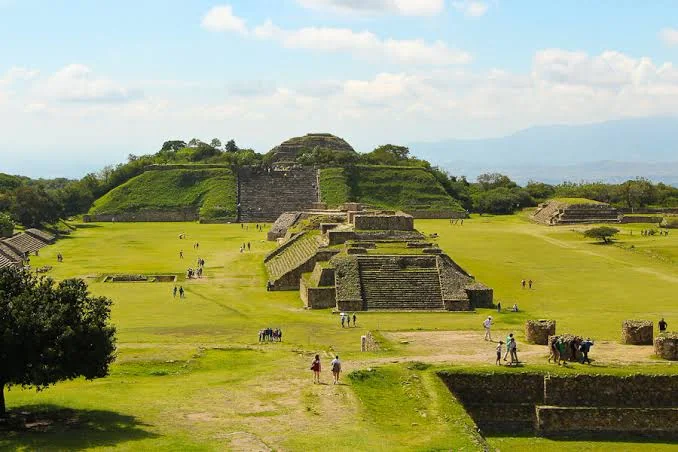
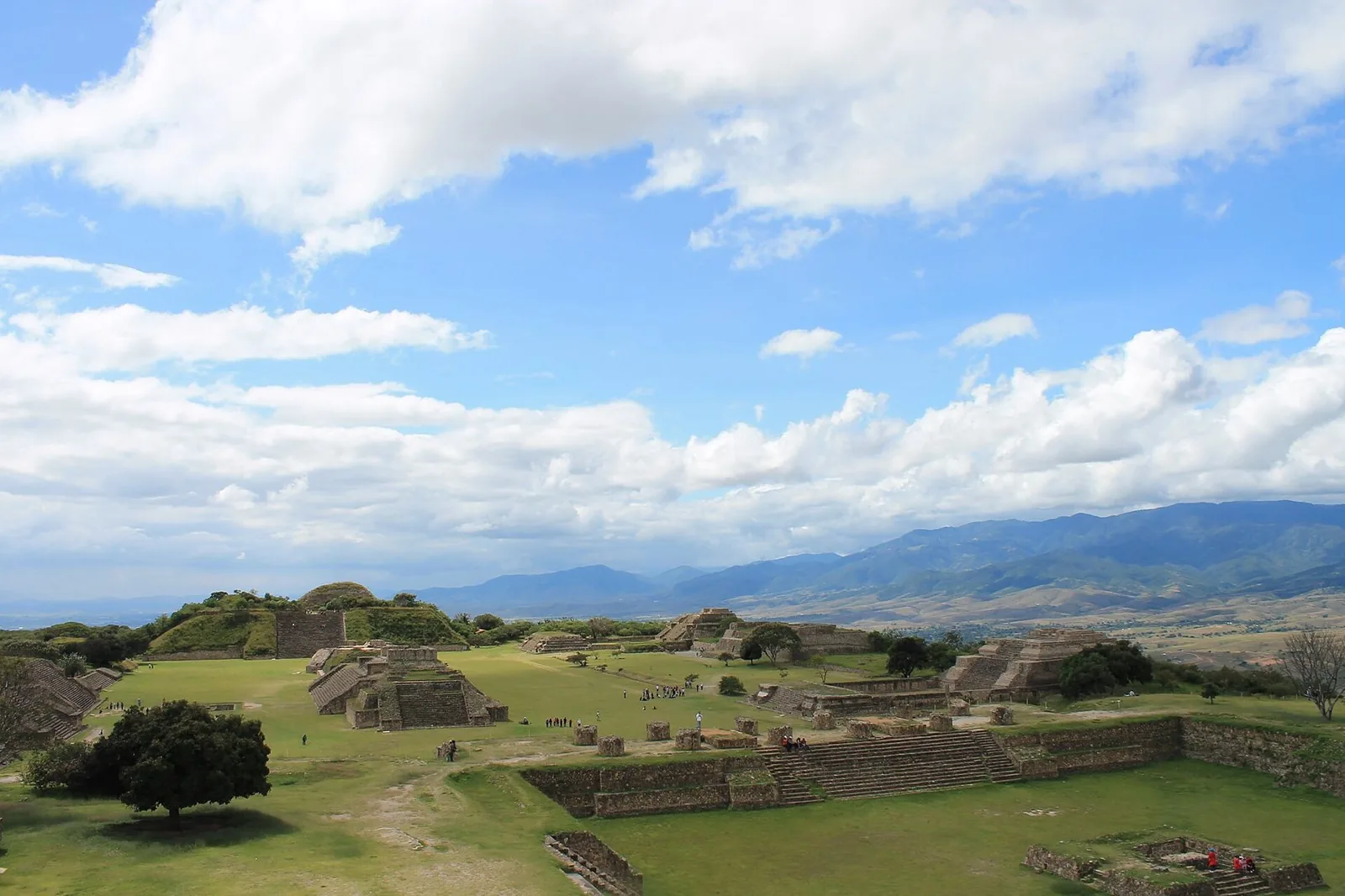
Beginning around 500 BC, the Zapotecs transformed the top of this mountain into a large ceremonial and political centre overlooking the surrounding valleys.
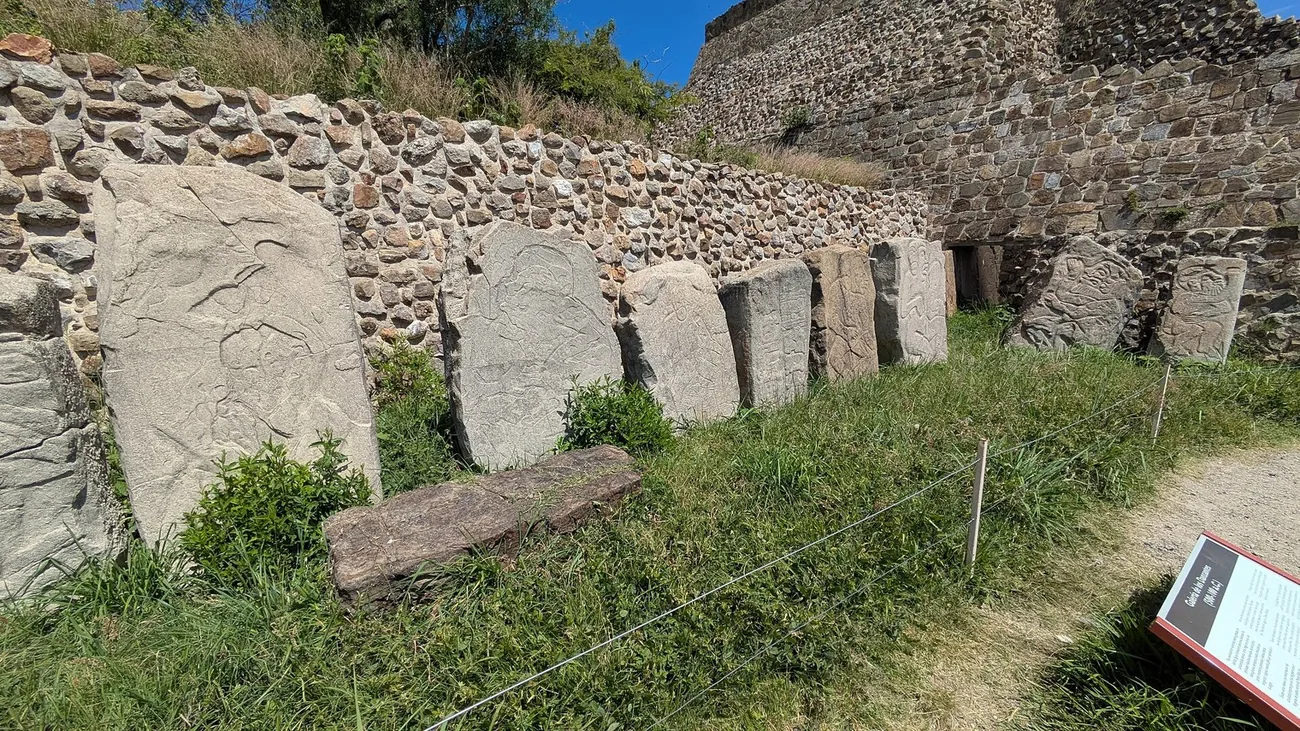
We explore the Great Plaza, temples, tombs, carved monuments and the famous Danzantes, hundreds of human figures carved into stone whose exact meaning is still debated.
In the afternoon we continue to Atzompa, a neighbouring section of the ancient city located along the next ridge. It contains elite residences, three ball courts and wide views back toward Monte Albán.
We return to Oaxaca for our farewell dinner.
Night: Oaxaca City · Meals: Breakfast, lunch, dinner · Driving: about 1½ h
Departure
After breakfast at the hotel, the trip comes to an end.
Guests departing that day can continue to Oaxaca International Airport, approximately 25 minutes from the historic centre.
Night: — · Meals: Breakfast · Driving: about ½ h
Order and timing can shift with conditions on the ground.
What you get
What’s included
Your trip includes six nights in a centrally located hotel, all meals during the itinerary, private transportation, entrance fees, archaeological guides where required, and all scheduled activities.
The Teotitlán day with Margarita and her family, the black-pottery workshop, and all archaeological site visits listed in the itinerary are included.
Flights, airport transfers, travel insurance, alcohol, gratuities, craft purchases and personal expenses are not included.
After booking, guests receive a detailed pre-departure guide with the final schedule, packing information, emergency contacts and practical information for Oaxaca.
Or email info@thecommunitygarden.org with a question first.
Who you’ll meet
The people we spend the week with
This trip is not only about archaeological sites. Throughout the week we also spend time with people who live and work in the valleys today.
The longest visit is in Teotitlán del Valle, where Margarita Gutiérrez Martínez and her family host us for a full day. Small groups allow time for conversation rather than simply watching demonstrations and moving on.
Your host in Teotitlán
Margarita was born in Teotitlán del Valle and leads The Community Garden’s Zapotec work. She and her family introduce us to their village through its language, weaving traditions, archaeology, church, food and everyday life.
Traditional dyes and weaving
We learn how wool is coloured using materials traditionally available in Oaxaca: cochineal for red, indigo for blue, and local plants for yellows and golds. The family then shows us how these threads are turned into textiles on traditional looms.
Black pottery made by hand
In San Bartolo Coyotepec we visit a family workshop producing the black pottery for which the village is known. The pieces are shaped without a potter’s wheel and polished by hand before firing, creating the distinctive dark surface associated with the town.
From the valleys
Photos
Twenty-two pictures from the week.
Book your place
Fifteen guests maximum
The April 5–11, 2027 departure is limited to fifteen guests. The trip costs $2,500 per person based on two people sharing a room. A $500 deposit reserves your place, with the remaining balance paid in Oaxaca. A private room is available for an additional $600.
Bring a guest and take $100 off. If someone books the trip with you, we take $100 off your ticket. Email us their name once they have booked and we will apply it to your balance.
If The Community Garden cancels the departure, your deposit is refunded in full. If you cancel, your deposit remains as credit toward a future Community Garden trip.
Deposit checkout is secured by Stripe. Booking for two? Adjust the quantity in the cart. Questions before you commit? Email info@thecommunitygarden.org.
Where your money goes
The Community Garden is a U.S. 501(c)(3) nonprofit organization. Profits from our trips support the organization’s cultural, educational and community programs. Taking part in one of our journeys directly helps fund that work.
Know before you go
Good to know
Dates, altitude, activity level, rooming and cancellations
Respectful travel
These archaeological sites are surrounded by living communities, not museum exhibits. Please ask before photographing people and, when buying textiles, pottery or other crafts, purchase directly from local artisans whenever possible. Professional filming, drones and some equipment at archaeological sites require permission from Mexico’s INAH. We arrange the necessary permissions for hosted departures where applicable.
Your dates
The trip runs April 5–11, 2027. We recommend arriving in Oaxaca by 1pm on the first day so you can join the afternoon activities and welcome dinner. April is normally dry and warm in Oaxaca, although seasonal fires can occasionally create haze in the valleys.
Altitude & climate
Oaxaca City sits approximately 1,550 metres above sea level, while Monte Albán is roughly 400 metres higher. April is one of Oaxaca’s warmer months, with sunny daytime temperatures often around 30°C and cooler evenings. Bring good sun protection and light layers.
Activity level
The trip is moderate rather than strenuous. Most days involve roughly 4–7 kilometres of walking spread throughout the day, mostly through archaeological sites, towns and museums. There are steep stairs at Monte Albán. The climb to the fortress above Yagul and the trail below Hierve el Agua are optional. Most days begin around 10am. Monte Albán is the exception, when we leave early to arrive for the 8am opening.
Group size & guides
The group is limited to fifteen guests. Kayleigh During travels with the group throughout the week, with licensed local guides joining us at selected archaeological sites. In villages, workshops and homes, the people who live and work there are our hosts.
Rooming
We stay all six nights in one hotel in Oaxaca City’s historic centre. The $2,500 trip price is based on two guests sharing a room. Solo travellers who are comfortable sharing can be paired with another guest of the same gender at no additional cost. A private room is available for an additional $600.
Deposits & cancellations
A $500 deposit reserves your place. Bring a guest and we take $100 off your ticket: if someone books the trip with you, email us their name and we apply it to your balance. If The Community Garden cancels the departure, the deposit is refunded in full. If you cancel your booking, the deposit remains on file as credit toward any future Community Garden trip, with no expiration date.
Some photography via Wikimedia Commons, images cropped: Escudo De Yanhuitlán by God.extincion (CC BY-SA 4.0); Templo San Jerónimo Tlacochahuaya interior by Roman Israel (CC BY-SA 4.0); Gallery of the Danzantes, Monte Albán, Oaxaca 2025 by MAHC-oaxaca (CC BY 4.0).